Best Online Reasoning Classes For Banking Exams

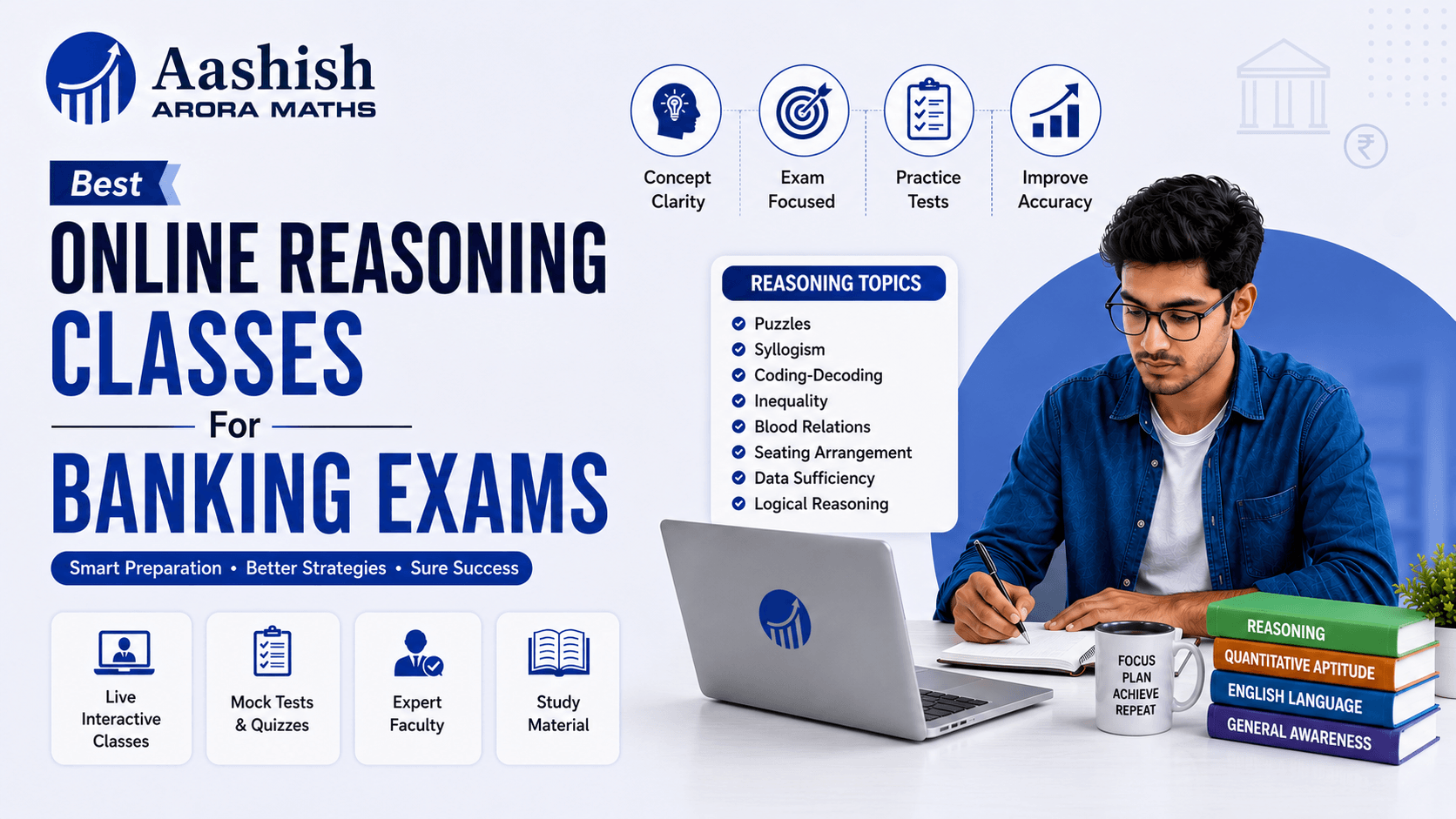
Preparing for banking exams involves more than just diligent study; it’s about strategic preparation. Within the various segments of these exams, Reasoning Ability frequently serves as the key determinant for success or failure. From logic puzzles and seating arrangements to syllogisms, inequalities, and code translation, reasoning demands consistent practice, a solid foundational understanding, and expert guidance. This can be a problem for students, which can be solved with the help of online reasoning classes, leading to better results.
Why Reasoning Is Important In Banking Exams?
Aptitude for Reasoning holds substantial importance in nearly all banking assessments. In the initial rounds, it helps aspirants meet the sectional threshold, whereas in the main exams, complex puzzles and logical challenges can significantly boost final marks.
The primary hurdle in reasoning isn’t complexity, but pacing. Many candidates grasp the principles but struggle to complete problems rapidly during the live test. This is where systematic online instruction proves beneficial. Consistent simulated tests, real-time clarification sessions, and questions mirroring actual exam standards condition test-takers to process information more swiftly and precisely.
What Makes An Online Reasoning Class Effective?
Before joining any course, students should understand what separates an average class from a truly useful one. Here are some qualities that matter.
-
Concept Clarity
A strong reasoning teacher focuses first on the basics. Without understanding the logic behind questions, shortcuts become useless. The best classes explain every topic step-by-step, especially for beginners.
-
Exam-Oriented Practice
Banking exams are highly pattern-based. Good online classes provide practice sets similar to the latest exam trends. Students should get exposure to both easy and high-level puzzles.
-
Doubt Support
Reasoning is a subject where one unresolved doubt can affect multiple topics. Courses with active doubt-solving support help students maintain continuity in preparation.
-
Mock Tests & Analysis
Simply solving questions is not enough. Students must learn where they are making mistakes. Detailed mock analysis improves accuracy and time management.
-
Bilingual Teaching
Many aspirants from Hindi-medium backgrounds feel uncomfortable with English-only teaching. The best platforms now offer bilingual classes, making learning easier and more inclusive.
Also Read: RBI Grade B Preparation Strategy for Quantitative Aptitude
How To Choose The Right Reasoning Teacher?
Numerous hopefuls sign up for a service based on its reputation, yet achievement hinges more on the instructor than the service itself. Below are a few suggestions for making a sound selection:
1. First, Understand The Teaching Style
View complimentary introductory lessons before formal registration. Certain educators prioritise quick methods, whereas others stress deep understanding of principles. Select based on what suits you best.
2. Check Student Reviews
Authentic learner testimonials assist in determining if the instruction is truly beneficial. Pay attention to remarks concerning assistance with queries, reliability of teaching, and growth in simulated test results.
3. Avoid Too Many Resources
A common error among learners is utilising guidance from numerous tutors at the same time. Commit to a solitary reliable provider and revisit material often.
4. Focus on Practice
No instructional program can ensure positive outcomes without personal effort. Following each session, tackle problems independently to solidify your understanding.
Tips To Improve Your Reasoning Score Quickly
Preparing for the reasoning section of banking exams requires patience, consistency, and going for smart effort. Many aspirants find the Reasoning section a challenge, which can consume a lot of their time. However, with an appropriate strategy, this section can transform into one of the top-scoring segments of the exam. Thus, below are some of the tips to improve your score in the reasoning section, which includes:
1. Practice Daily
Logical thinking isn’t a skill acquired in a short span of one or two weeks. It requires consistent effort as the mind builds analytical abilities slowly and gradually. Those who engage in daily reasoning exercises grow more familiar with question formats and develop the ability to tackle problems more swiftly. To solve this, some of the online reasoning classes given with the help of Aashish Arora Maths include:
- Begin with easy topics like inequalities or syllogisms.
- Move to moderate topics such as coding-decoding or blood relations.
- Finally, practice high-level puzzles and seating arrangements.
2. Focus on Accuracy First
A common problem among many banking aspirants is attempting to answer questions rapidly from the beginning. In reasoning, speed without accuracy can lead to negative marking. Students must focus on understanding the logic behind every question. Once the concepts become clear, speed naturally improves with practice. This can be done through:
- While solving puzzles, carefully note every clue before arranging information.
- In syllogism questions, understand the statement properly before applying the rules.
- In coding-decoding, identify patterns and then slowly increase your speed.
3. Time Management
In banking exams, speed matters as much as accuracy. Some students know every concept but fail because they spend too much time solving one difficult puzzle. If you look at it from a deeper lens, some students understand a golden rule: “You do not need to solve every question to clear the exam.”
4. Solve Previous Year Papers
Previous year question papers are one of the most underrated tools to learn and prepare for banking exams. Many students spend hours trying to solve random questions, but ignore actual banking exam patterns. So, to recap, by solving previous year question papers, students will understand:
- Which topics are important?
- How difficult the exam actually is.
- Which questions are time-consuming?
- Which sections are scoring?
Aashish Arora Maths: Helping Aspirants With Bank Exam Classes
Looking for top-tier bank exam classes for SBI, IBPS, NABARD, or anything else? Aashish Arora Maths provides learning opportunities for aspirants, focused on boosting both accuracy and speed. Through teaching that focuses on core ideas, practice geared toward exams, explanations in two languages, and thorough mock test evaluation, aspirants achieve a suitable blend of foundational knowledge and refined methods for tackling challenges. So, if you need help in banking exams that are focused on Quantitative Aptitude, then Aashish Arora Maths will help you out.
So, are you looking to master banking exams through online bank exam classes? Take hold of your future in banking exams today with Aashish Arora Maths.
The Final Word
To succeed in banking exams, it’s crucial to have more than just diligent effort. A well-defined strategy, expert advice, and consistent practice are important. The Reasoning Ability section can transform into a top-scoring area if candidates prioritise understanding concepts, managing their time effectively, and engaging in common practice tests. Selecting appropriate online reasoning classes can help candidates boost their speed and precision while minimising the chaos arising from a multitude of distributed study materials. Through guidance from experienced professionals, preparation tailored to the exam’s requirements, and a structured learning environment, platforms such as Aashish Arora Maths can empower students to build self-assurance and prepare thoroughly for rigorous banking examinations.
FAQs
Q) Why is reasoning important in banking exams?
Ans) Reasoning is one of the most scoring sections in banking exams and helps candidates improve their overall marks and sectional cut-off performance.
Q) Which banking exams include a reasoning section?
Ans) Exams like SBI PO, SBI Clerk, IBPS PO, IBPS Clerk, IBPS RRB, RBI Assistant, and NABARD include reasoning ability sections.
Q) What are the most important topics in banking reasoning?
Ans) Important topics include puzzles, seating arrangement, syllogism, inequality, coding-decoding, blood relations, direction sense, and input-output.
Q) Are online reasoning classes effective for beginners?
Ans) Yes, online reasoning classes are highly effective for beginners because they explain concepts step-by-step and provide regular practice sessions.
Recommended for you
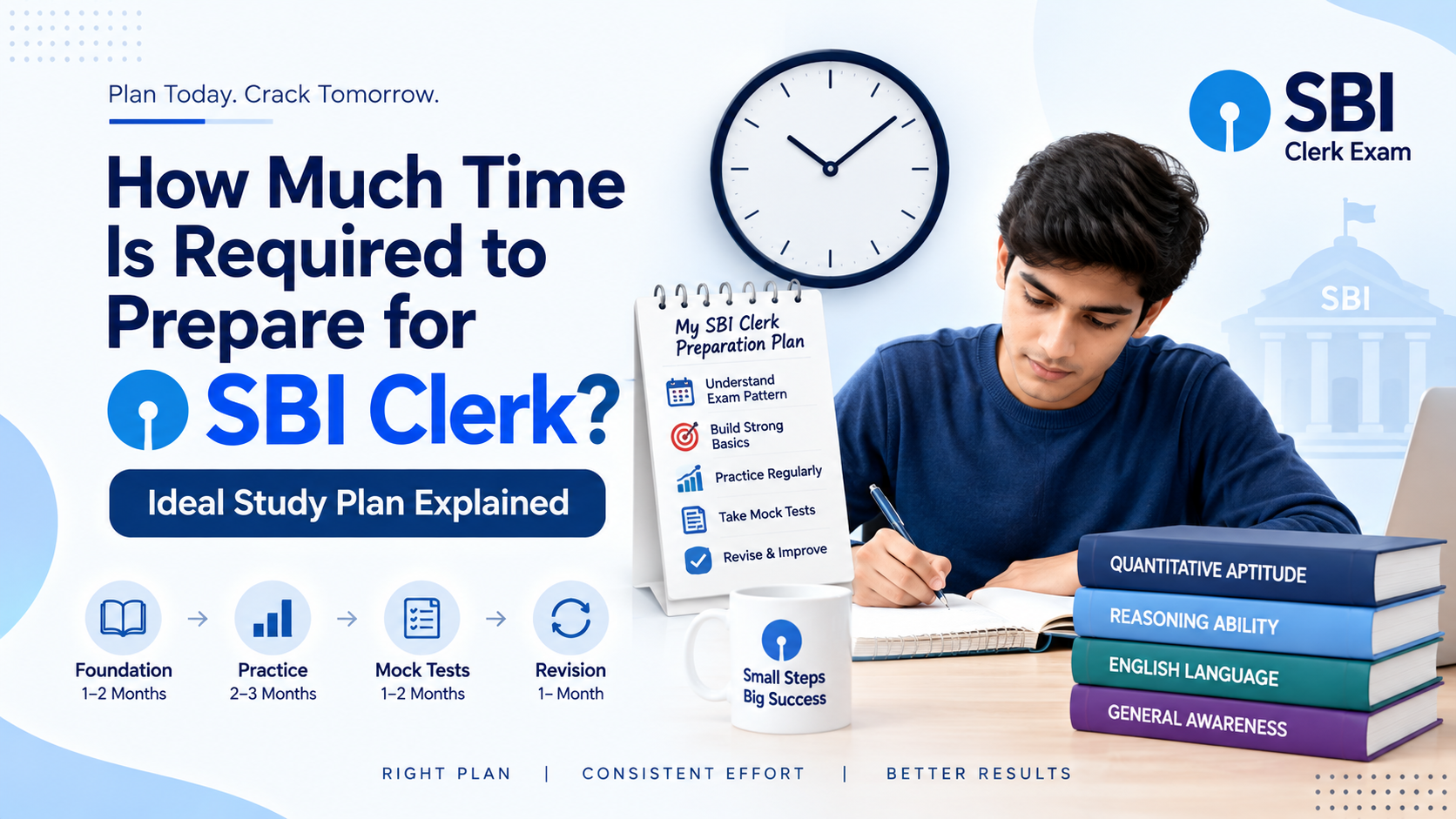
How Much Time Is Required to Prepare for SBI Clerk? Ideal Study Plan Explained
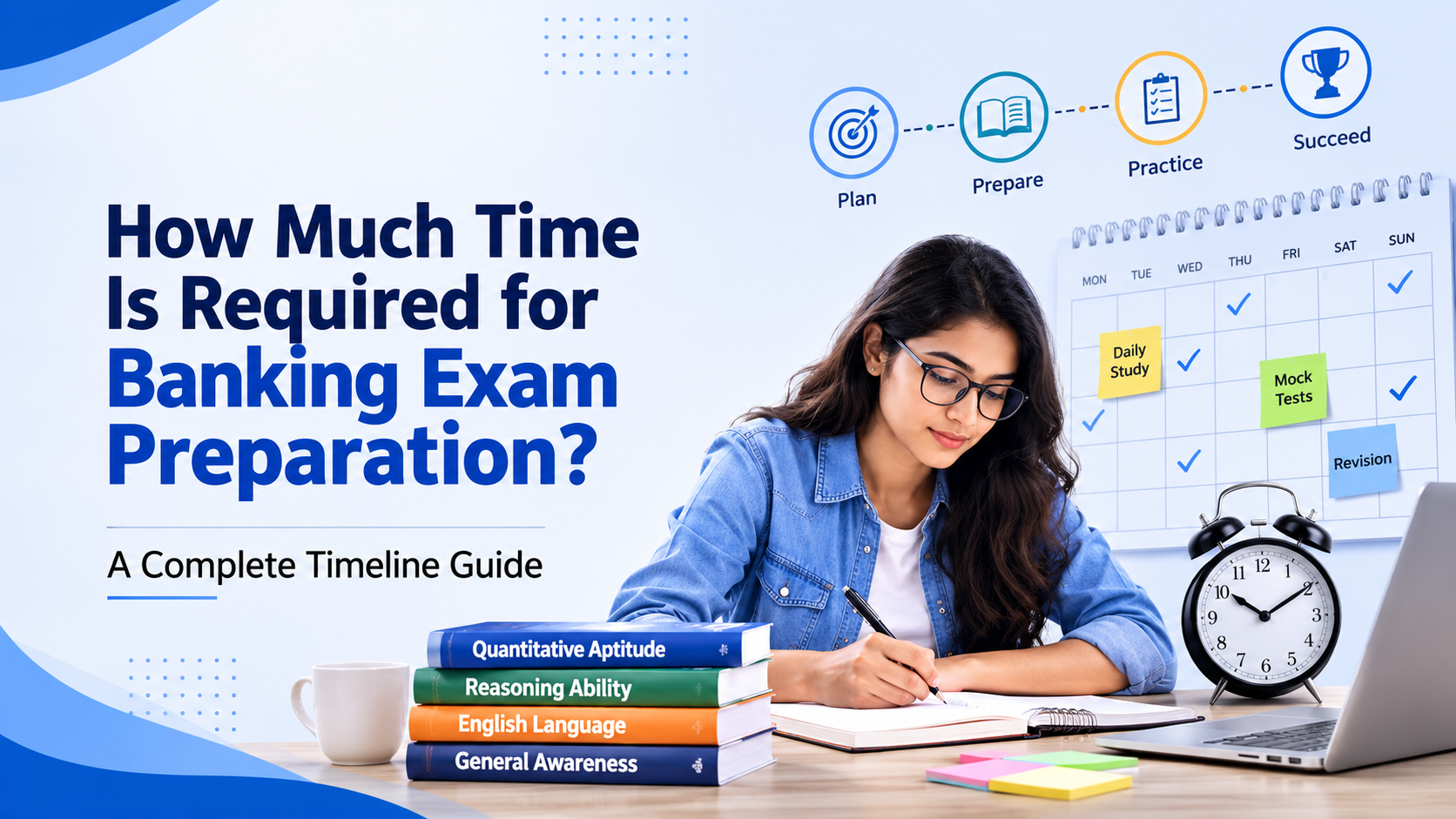
How Much Time Is Required for Banking Exam Preparation? A Complete Timeline Guide