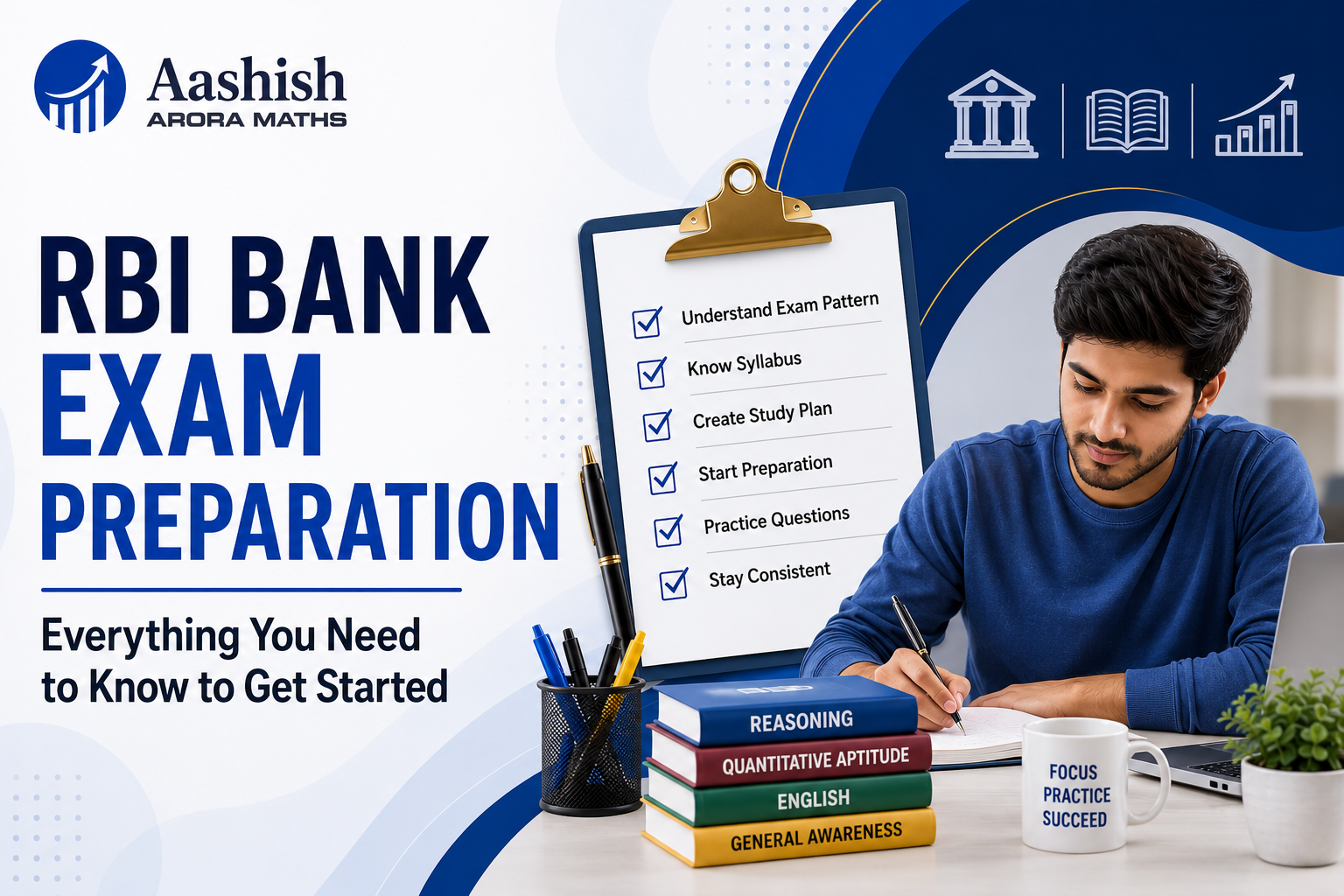
RBI Bank Exam Preparation: Everything You Need to Know to Get Started

Preparing for the RBI exam can feel overwhelming at first. So many subjects, so much competition, and honestly – so much noise online about what to study and what to skip. But here’s the truth: the exam is not unpredictable. It only feels that way when your preparation lacks structure.
Good RBI bank exam preparation is not about studying everything. It’s about studying the right things in the right way, consistently. Once your approach is clear, the exam becomes much more manageable than most aspirants think.
This guide breaks everything down in a simple, practical way so your RBI bank preparation feels less confusing and more structured.
Understanding the RBI Bank Exam
The Reserve Bank of India (RBI) test is held for different positions like Grade B Officers and clerks. It is one of the most sought-after tests in the banking industry as it leads to a secure and respectable job in the Indian banking sector. To get a job in this field is not only to pass a test, but also to be a part of the institution that is crucial in setting monetary policy for the Indian economy and in ensuring its stability.
The test generally tests the aptitude of the candidates for quantitative skills, reasoning, English, general awareness, and economics or finance (particularly for senior roles).
In recent years, the test has been more analytical in nature, with questions in the general awareness and finance sections often based on decisions taken by the RBI, banking reforms and economic developments, as opposed to facts. So, the RBI bank exam preparation demands a greater emphasis on conceptual learning and being aware, rather than memorising.
RBI Assistant Prelims DI Strategy
RBI Bank Exam Preparation: Subject-Wise Syllabus Breakdown
The syllabus is a very important aspect of preparation. A clear syllabus is what will prevent you from confusion and ensure you study the right thing.
- Quantitative Aptitude: Arithmetic, data interpretation, simplification and number series
- Reasoning Ability: Puzzles, logical reasoning, seating arrangement, and analytical questions
- English Language: Comprehension, grammar, vocabulary, and sentence correction
- General Awareness: Banking, current events, economy and financial news
- Finance & Management (for Grade B): Economics, RBI and financial systems
A strong grip on the syllabus is the foundation of effective RBI bank preparation.
How to Start RBI Bank Exam Preparation
The common mistake made by students is that they start studying without a plan. It causes confusion and anxiety.
Start with:
- Knowing the complete syllabus
- Knowing your strong and weak points
- Planning a realistic study timetable
- Weekly goals instead of aspirations
Consistency is more important than intensity in RBI preparation.
Subject-Wise Preparation Strategy: How to Approach Each Subject Smartly
Quantitative Aptitude
Start with the basics. Like simplification, ratios, percentages and basic arithmetic. Don’t jump to the shortcuts in the beginning, as that often leads to confusion. No need to be in a rush, the first step is understanding the numbers.
Then, start practising and solving miscellaneous questions. You’ll find your speed tick up naturally. Then add in the shortcuts. But just as a supplement, not a substitute for concepts.
Reasoning Ability
Reasoning is one such section that seems jumbled but is really interesting. Think Patterns. Start with basic puzzles and reasoning questions to get you familiar with the patterns. Gradually build up to complex seating and arrangement questions. You may feel that you are not making progress at first, but that is okay.
Because eventually, you will find yourself picking up on these patterns subconsciously with practice, and your speed will increase.
English Language
Keep It Natural. Because English does not require you to learn rules… It is about exposure. Read as much as you can every day, even if it’s just a small text or newspaper article. Start with meaning instead of (too much) grammar. Then, gradually, focus on grammar, vocabulary, reading comprehension exercises.
The more practice you do, the more it becomes second nature during the exam, rather than a problem to “crack”.
General Awareness
Always stay updated. You can easily score well in this section if you do not overlook it. Just be consistent. Read about banking knowledge, general awareness, RBI news and economic news. You don’t have to study everything. Be consistent.
Even a small daily habit yields substantial long-term benefits. The objective is to be informed about unfolding events, not to store countless isolated data points.
Importance of Current Affairs in RBI Bank Preparation
Current affairs play a major role in RBI exams. Questions are asked regarding any banking news, government initiatives and economic events.
Make it a habit to:
- Read daily news related to banking and finance
- Follow RBI circulars and updates
- Revise the monthly current affairs regularly
This section can significantly improve your overall score if prepared consistently.
Role of Mock Tests and Practice
Mock tests are not optional; they are essential.
They help you:
- Understand the exam pattern
- Improve time management
- Identify weak areas
- Build exam confidence
After every mock test, analyze your mistakes carefully. Improvement comes from analysis, not just repetition.
Ashish Arora Maths: A Smarter Approach to RBI Bank Exam Preparation
If you’re preparing for exams like SBI Clerk, IBPS Clerk, or RRB Office Assistant, choosing Ashish Arora for Maths preparation can make a real difference. But what actually sets it apart?
It comes down to experience, scale, and consistent results:
- Over 9 years of teaching experience in Quantitative Aptitude
- Strong pan-India reach, guiding students from different regions
- More than 1000 recorded sessions available for structured learning
- A learning base of around 80,000+ active students
So, if RBI is your goal, don’t leave it to chance. Connect with Ashish Arora Maths and stay consistent till success.
Final Tips for RBI Exam Success
Stay patient with the process. RBI exams reward steady preparation, not last-minute pressure. Consistency and hard work are key to success in RBI exams. Set small targets and remain focused on them, and stick to a schedule.
When it comes to RBI bank exam preparation, quality of time doesn’t matter, quality of time does. Strategic planning is always better than long and unstructured studying. When done properly, success in the RBI exam is a possibility. Don’t try to learn everything in one go. Build concepts, revise them and practice each day. And practice taking mock exams to know where you are. This will guide your banking exam preparation by allowing you to see what’s working and what’s not. Not only that, but this will also help you build your success over time.
FAQs
Q1. Is RBI exam preparation difficult for beginners?
Not really. If you start with a clear plan. The RBI exam feels tough only when preparation is unstructured. With consistent practice, strong basics, and regular revision, even beginners can build a solid preparation strategy.
Q2. How much time is needed for RBI bank exam preparation?
It depends on your starting level. But ideally 4–6 months of focused preparation is enough for most aspirants. What matters more than time is how consistently you study and how well you revise and practice mock tests.
Q3. What is the best strategy for RBI bank preparation?
The best strategy is simple: focus on concepts first. Practice daily, stay updated with current affairs and take regular mock tests. A balanced approach across all subjects is key to performing well in the exam.
Recommended for you
How Much Time Is Required to Prepare for SBI Clerk? Ideal Study Plan Explained

How Much Time Is Required for Banking Exam Preparation? A Complete Timeline Guide